
Employee Benefits to Take Advantage of When Expecting a Baby

open enrollment pregnancy benefits

Employee Benefits to Take Advantage of When Expecting a Baby

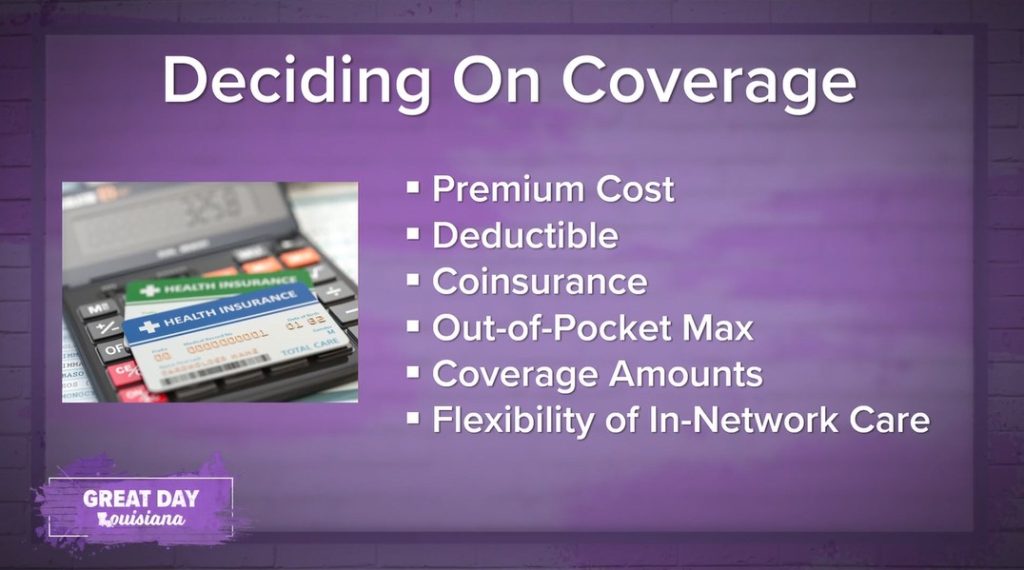
Traditionally, Open Enrollment is synonymous with health care. Assessing employer-sponsored coverage amid rising costs and premiums. In a previous piece, we provided a checklist to help you evaluate your health insurance options during pregnancy and coordinate with your spouse. But if you’re expecting, here are some lesser-known benefits you should be aware of when reviewing your employee benefits booklet. In this blog, we’ll discuss how to save money on labor & delivery, childcare, and estate planning.
Labor & Delivery: How Hospital Indemnity Insurance May Reduce Hospital Costs

What is Hospital Indemnity Insurance?

Hospital Indemnity Insurance provides a lump-sum payment if you are admitted to the hospital, along with daily benefits during your hospitalization. 

Who Is Elgible for Hospital Indemnity Coverage?

Not all hospital indemnity insurance covers childbirth-related hospitalization or any planned inpatient hospital stay. Some employers offer coverage solely to alleviate some of the financial stress associated with having a baby. Others, not so much. It’s not uncommon to see these plans exclude expected inpatient hospital stays, pregnancy, and/or preexisting conditions. Read your summary plan document or speak with someone in HR before opting into this insurance benefit if you’re unsure which hospitalizations are covered. 

Typical Cost and Payout for Hospital Indemnity Plans

Most larger employers offer this benefit with two (2) options:  a “Low Plan” and a “High Plan”. The “Low Plan” being slightly cheaper with a smaller cash benefit. 

The average cost we see is about $30/month, deducted after-tax from your paycheck. 

For “High Plans”, we typically see a lump sum initial hospitalization benefit of $1,000 and a daily benefit of $100/day. 

Hospital Indemnity Example for Labor & Delivery

A couple is 6 months pregnant in November. Through one of their employers, they have access to Hospital Indemnity insurance. The premium is $30/mo deducted from their paycheck. Therefore, they will pay $360 in 2026 for this benefit. Their benefit for the plan is as shown above: a $1,000 lump sum if either participant is hospitalized and a daily benefit of $100/day. In February, they give birth to their child and spend three nights in the hospital. They submit their hospital bill and receive a cash benefit of $1,000 + ($150 x 3), or $1,450. Since they will pay $360 for the year, they come out ahead by $1,090, which they can put toward their health insurance deductible. 

Wait, It Gets Better

If each partner has access to Hospital Indemnity insurance through their respective employers, there may be no condition preventing them from collecting a cash benefit for the same event. 

What To Watch Out For With Hospital Indemnity Insurance

Most require you to pay into it for the whole year. If you choose to opt out during your Qualifying Life Event enrollment period before receiving your cash benefit, you might lose your eligibility to collect it.

How a Dependent Care FSA Lowers Your Tax Bill

What Is a Dependent Care Flexible Spending Account (DCFSA)?

A Dependent Care FSA is a tax-advantaged account where you can set aside pre-tax dollars to pay for dependent care that enables you to work. 

Dependent Care FSA Eligibility Rules for Married Couples

There is a household limit of $7,500 maximum. This is a household limit, not an individual limit. Therefore, it’s irrelevant whether you have multiple children or access to multiple employer-sponsored Dependent Care FSAs; you can only contribute a total of $7,500 annually for your household. Generally speaking, both spouses must be working and have incomes above the contribution amount. There are some exceptions for full-time students and those who are job hunting. 

Most mid-sized to large employers offer these, and it’s also quite common for small employers to offer them. This is exclusively available as an employee benefit, and there is no other way to contribute to a Dependent Care FSA. 

How Much You Can Contribute to a Dependent Care FSA

There isn’t any “pricing”; it’s just money deducted evenly from your paycheck that you can reimburse yourself for later after proof of claim of an eligible expense. 

Dependent Care FSA Tax Savings Example

A couple knows their daycare costs will exceed the $7,500 DCFSA maximum contribution amount and contributes accordingly. $312.50 will be deducted from their semi-monthly paycheck throughout the year. This couple is in the 24% federal marginal tax bracket and the 3% state marginal tax bracket. Contributions are not subject to federal or most state taxes and are also exempt from FICA taxes (Social Security and Medicare), which have a tax rate of 7.65%. As a result, they reduced their taxes by $2,598.75 ($7,500 x (24% + 3% + 7.65%)) by making the full DCFSA contribution and reimbursing themselves for eligible childcare costs. 

Common Dependent Care FSA Mistakes to Avoid

Like all “Flexible Spending Accounts,” these funds are use-it-or-lose-it. You might be able to carry over a small amount to spend in the following year, but it’s better only to contribute what you’re guaranteed to spend in the current year. Furthermore, informal childcare arrangements, such as paying a family member or babysitter in cash, are not eligible for reimbursement. 

Estate Planning Benefits for New Parents

What Is Group Legal Insurance?

Certain plans provide prepaid legal services and coverage for estate documents, along with various other services such as real estate, adoptions, name changes, court proceedings related to reproductive assistance, and debt collection defense. Here’s a recent blog by Eddy breaking down how to create an Estate Plan.

When to Enroll in Group Legal Coverage?

If your employer offers it, there are no eligibility “gotchas.” However, if this benefit can be added through a Qualifying Life Event, such as having a baby, it likely makes sense to wait until then to take advantage of it. 

Availability: Most mid-sized to large employers offer these. 

Cost Comparison: Group Legal vs. Online vs. Local Attorney

Most often, we see pricing for group legal insurance set at the household level, around $10/pay period. That’s about $240/annually. 

The average cost of a DIY online plan is about $750. 

Hiring a local attorney will likely cost $3,000. 

If your situation is fairly straightforward, using your group legal benefit to have an attorney create a basic Estate Plan for you is a great starting point, especially for young families. 

Estate Planning Example for New Parents

A couple welcomes a baby mid-year. One spouse uses their Qualifying Life Event to add legal coverage for $10 per pay period. They begin the process immediately and, after 2-3 review rounds, complete and sign their Estate Plan before year’s end. This couple has just accomplished a vital planning task for only $120! 

Wait, It Gets Better

Some legal programs may put you in touch with a good local attorney, in which case you receive hands-on assistance at a drastically reduced price compared with contacting them directly. 

Limitations of Employer-Sponsored Legal Plans

The quality of group legal coverage can vary significantly. You might not have access to a local attorney or one you would have selected yourself. When relying on their national team of attorneys, the level of service can differ greatly. We suggest asking colleagues about their experiences with the plan.

Frequently Asked Questions About Employee Benefits for Expecting Parents

Q1: Is hospital indemnity insurance worth it if you’re pregnant?
Yes, hospital indemnity insurance can be worth it if your employer’s plan covers childbirth-related hospital stays. A short hospital stay can result in a payout that exceeds the annual premium, helping offset deductibles and out-of-pocket costs.

Q2: Can both parents collect hospital indemnity benefits for the same birth?
In many cases, yes. If each parent has their own employer-sponsored hospital indemnity plan, there may be no restriction preventing both policies from paying benefits for the same hospitalization.

Q3: Do both spouses have to work to use a Dependent Care FSA?
Generally, yes. Both spouses must be working, looking for work, or attending school full-time. Exceptions exist for full-time students and spouses who are unable to care for themselves.

Q4: How much can a family contribute to a Dependent Care FSA?
For 2026, the household contribution limit is $7,500 per year. This is a household cap, regardless of how many employers offer the benefit or how many children you have.

Q5: What childcare expenses are eligible for Dependent Care FSA reimbursement?
Eligible expenses include daycare, preschool, before- and after-school care, and summer day camps. Informal cash payments to relatives or babysitters typically do not qualify.

Q6: Can group legal insurance help new parents with estate planning?
Yes. Many group legal plans cover wills, powers of attorney, and guardianship documents, making them a cost-effective way for new parents to establish a basic estate plan.

Q7: When is the best time to enroll in new benefits if you’re expecting?

Open Enrollment is ideal, but having a baby is a Qualifying Life Event that often allows you to add or change benefits mid-year, including legal coverage and FSAs.

Fiduciary, fee-only, Certified Financial Planner, Mike Turi

Mike Turi, CFP® APMA™ is the Founder and a Lead Financial Planner at Upbeat Wealth, a fee-only firm based in New Orleans and serving clients virtually across the country. He specializes in providing straightforward financial guidance to ambitious young families as they navigate life’s many milestones.

Do you have questions about what we shared in this post, or anything else in general? Feel free to schedule a free consultation or drop us a line!

Sign up for our newsletter (at the bottom of this page) to stay up to speed on our Upbeat Insight.

Disclaimer: All content in this article is provided for educational, general information, and illustration purposes only. None of the information is intended as investment, tax, accounting, or legal advice. Nor is it a recommendation for purchase or sale of any security, or investment advisory services. We encourage you to consult with a financial planner, accountant, and/or legal professional for advice on your specific situation. Read our full disclaimer here.

Term Life Insurance: Protecting Loved Ones and Avoiding Mistakes

Term Life Insurance, Group Life Insurance, Avoid Costly Insurance Mistakes

What is the Greatest Risk to My Family or Loved Ones?

For us in New Orleans, we are intimately familiar with homeowners, flood, and auto insurance. Perhaps “intimately familiar with” isn’t the best way to phrase it. Let’s say “tortured by.” Yeah, that’s better. It’s easy to understand the need. If you own a home that would cost $500,000 to rebuild and owe $400,000 on your mortgage, you’ll likely carry homeowners and flood insurance, regardless of how painful the premiums may be. You don’t want to lose your home while still being responsible for your mortgage payments 25 years from now. 

You purchased that home because you were confident you would earn enough money to live there until you decided to move on someday.

But what if you lost your ability to earn because of death or disability? If someone relies on your income and that income ceases to exist, your loved ones may lose their sense of autonomy regarding housing, transportation, education, and quality of life. Financial goals and objectives that previously seemed attainable may now appear out of reach. 

Here’s the deal: if someone depends on your income, both now and in the future, it’s worth protecting. Please do not leave your ability to financially support your loved ones to chance or a GoFundMe.

And if you’re in your early 20s with no dependents, you likely don’t need to worry about life insurance. It would have to be quite a unique situation otherwise. Therefore, you can tell your friend at—just making up a name—Northwestern Mutual that you’re all set.

Buy Insurance? Surely, There are Other Forms of Risk Protection!

Insurance just feels gross. You pay all this money with the goal of never needing it. So, let’s explore other forms of risk protection to see if there’s an alternative. 

Risk Mitigation: Minimize your risk exposure by avoiding it entirely or implementing protective measures. Easy enough! Kid on the way? Maybe leave the motorcycles, helicopters, skydiving, and deep-sea diving to Tom Cruise. 

Self-insuring: Personally accepting the financial consequences of a risk occurring. Self-insuring can be effective for everyday risks or those that are relatively minor and low risk. For instance, you might not buy travel insurance every time you fly. Or you might build up, say, an emergency fund to protect against losing your job and a temporary loss of income. 

While living a safer, healthier lifestyle sounds great – shit happens. And unfortunately, I’ve participated in far too many of those *shit happened* conversations since starting in this business 14 years ago. You *might* be able to self-insure it, but the odds are low if you’re at the beginning of your career and haven’t had a chance to build up your assets.

Enter Insurance: a Basic Explainer

And here comes the Upbeat Wealth disclaimer: we do NOT sell insurance, so this isn’t a sales pitch. We take pride in our fee-only approach to financial planning, which strives to remove conflicts of interest. This helps us (and you) remain objective, knowing that we are always a fiduciary working in your best interest. This is more of a heart pitch to take care of your loved ones. 

Purchasing Insurance: Transferring the financial consequences of a risk to a third party in exchange for premiums paid. Insurance is usually comprised of these four (4) components: 

Premium: The amount you pay to keep the policy active, typically on an annual basis.

Coverage: The type of risk you are protecting against. 

Benefit: The pool of money left to you or your beneficiaries in the event of a claim.

Term: The duration of time that coverage is provided to the insured.

Term Life Insurance → This is The Way

As you enter your family-building years, Term Life insurance policies are typically affordable, straightforward, and offer substantial benefits to help replace income, which can pay off your family’s mortgage and fund your children’s educational goals. 

If you’re seeking financial stability for your household in case you’re no longer around, term life insurance is the primary option to consider. Using the components of insurance above, here’s how that would translate to a Term Life Insurance policy:

Premium: Annual amount required to maintain the policy. Although there are different types of term life insurance policies, the most popular is the “fixed premium” term life policy, meaning your annual premium will stay the same throughout the duration of the policy. According to NerdWallet, the average rate for a 30-year-old woman to obtain a 20-year, $1,000,000 policy is $374 per year. 

Coverage: Transferring the risk of your premature death to a third party (the insurance company), effectively protecting your future income that you have not yet earned. Later in this article, we’ll discuss more about choosing a coverage amount. 

Benefit: Should you pass away unexpectedly with coverage, your beneficiary(ies) will receive a sum of money equal to the policy’s face value, tax-free! 

Term: The policy will provide coverage for a set amount of time as long as you pay the fixed annual premium. In the example of buying a policy because you have young kids, we aim to align the policy term with the birds leaving the nest. There is also no cancellation policy. So if you experience a sudden money event, such as your company stock soaring or selling your business, thereby accumulating significant assets that your family could comfortably draw from, you could stop paying your premiums and allow the policy to lapse.

Calculating Term Life Insurance Coverage is Part Art, Part Science

When calculating suggested coverage amounts and term lengths, we aim to align the timing of when dependents will be out of the home with the necessary amount to protect after-tax earnings, pay off debts, and fund education. While I believe you should think carefully about the amount of coverage you ultimately obtain, this is one area where I wouldn’t let analysis paralysis consume you. Anything is better than nothing. 

And while having no earned income and applying for a $5M Term Life Policy may raise some red flags, there generally aren’t many restrictions on the amount of coverage you can reasonably obtain. Therefore, the best answer is to go secure the bag at a number where you sleep well at night. For those seeking a more strategic approach to selecting the ideal policy, here’s how we guide households through the process. 

Case Study: 

Muses and Thoth are 35 years old, married, and have one child, who is 2 years old, with another on the way this year. They have a household income of $300,000 comprised of Muses ($225,000) and Thoth ($75,000). They recently purchased a $900,000 home and have $700,000 left on their mortgage. In addition to their mortgage, they have a $30,000 car loan. Muses also has $200,000 in Federal Student Loan Debt. Based on their savings rate, they project to achieve work flexibility by Age 57. 

In this scenario, if we were reviewing Muses’s Life Insurance Need, we would use the following inputs:

term life insurance, group life insurance

Income-Earning Years Remaining: We aim to protect Muses’s net income for her estimated 22 years of earnings. 

Annual Income to Protect: We excluded $40,000 in “personal expenses,” representing the household’s annual savings. The payout from the life insurance policy would effectively replace their need to keep saving. An effective tax rate for a household in Louisiana with an income of $300,000 is approximately 19% federal and 3% state. Since term life insurance benefits are tax-free, we only need to account for the net cash flow to the household rather than the gross amount of income. 

Adjustments: While the S&P 500 Index has returned approximately 10% annually over the past century, we will use a more conservative estimate of 6% for projected investment growth. After considering tax drag (taxes on capital gains, dividends, interest) as well as inflation (the rising cost of goods and services), we arrive at a real rate of return of 2%. 

Current Resources: Muses has employer-provided life insurance of 1x salary ($225,000) through work. However, we will disregard this. Muses doesn’t expect to stay in this job forever, and this policy is not portable. Therefore, when leaving this position, coverage will no longer be available. However, their household currently has $300,000 in investable assets that would be used to help replace unearned wages due to death. We’ll deduct this amount from their Total Life Insurance Need

Liabilities + Final Expenses: Canvas ready? Here comes the art of determining your unique needs. Yes, by successfully replacing Muses’s net income, they could reasonably expect to pay off their mortgage according to the original payment schedule. However, Muses expressed, “F that! We just bought this place, and I never want my family to risk losing it.” Muses incorporated this into the death benefit so Thoth could pay off the mortgage and significantly reduce their housing costs. They also decide it’s in their best interest to use the proceeds to pay off the car and cover any funeral expenses. 

Education: Muses and Thoth want to intentionally save enough money to cover the tuition costs of a public four-year in-state college. Using the current tuition cost growing at a 6% inflation rate, they have a present educational need of $166,386. Assuming the funds earmarked for college tuition increase by 8% annually, they will satisfy educational goals for both children. 

Current Remaining Life Insurance Need (today): $3,037,012. 

20-Yr Annual Premium Cost (Preferred Best Health Class): ~$1,200

15-Yr Annual Premium Cost (Preferred Best Health Class): ~$900

From a planner’s perspective, if you’re in good health, that is a small premium to pay to ensure life continues with some semblance of normalcy for your loved ones.

Avoiding Common Life Insurance Mistakes

Don’t rely too heavily on your employer’s group life insurance benefits. Just because you have employer-paid life insurance or access to additional voluntary insurance doesn’t mean you’re fully covered. Group term life insurance policies are typically NOT portable. If your employment status changes, you will lose this coverage. Moreover, your health may change, making qualifying for a preferred rate more difficult than when you were younger and, perhaps, healthier. Securing voluntary coverage through your employer can be beneficial if you have a pre-existing condition that impacts your health class rating, as there is typically a specific amount of voluntary coverage you can obtain without undergoing medical underwriting. However, if you are young and healthy, you will likely pay more for voluntary coverage through your employer than if you purchased a policy privately. 

If expecting a baby, do not wait until the third trimester to apply for term life insurance. Even if you are having a low-risk pregnancy, insurance companies may underwrite you differently as you get further along. This can be a costly mistake throughout the duration of a policy that could have been avoided by merely mistiming the application by a few weeks. 

While we understand that children are dependents, we shouldn’t overlook aging parents. If you’re part of the sandwich generation, they might also rely on you for care. 

Even if one spouse is a stay-at-home parent with no earned income, there is likely still a need for life insurance. Close your eyes and relive the wonder of what single-parenting looks like when your significant other is gone for a weekend. Yeah, you’re probably going to have some additional childcare costs. 

Overinsuring yourself, especially if no one is actually relying on your income. If you don’t need life insurance, don’t purchase life insurance. One unique situation where you might still consider it is if you have a hereditary disease that hasn’t taken hold but is known to be passed down in your family. Perhaps you still plan on having dependents one day, and it makes sense to get ahead of something that might be pre-existing. 

Another area where I see folks overinsuring is with their kids. Losing a child is an unimaginable tragedy, but they don’t require an insurance policy on their life, especially one that combines insurance with investing. Instead, just invest for them. And in a poor attempt to lighten the mood, feel free to ignore this if your little one is in a deep sports gambling hole with a bookie. Sorry…

And finally – be cautious of sales pitches that seem too good to be true, particularly those that combine insurance coverage with retirement investing. This is an article for another time, but just remember that good products are bought while bad products are sold.

Looking for more risk protection tips? Here’s our risk checklist! 

Fiduciary, fee-only, Certified Financial Planner, Mike Turi

Mike Turi, CFP® APMA™ is the Founder and a Lead Financial Planner at Upbeat Wealth, a fee-only firm based in New Orleans and serving clients virtually across the country. He specializes in providing straightforward financial guidance to ambitious young families as they navigate life’s many milestones.

Do you have questions about what we shared in this post, or anything else in general? Feel free to schedule a free consultation or drop us a line!

Sign up for our newsletter (at the bottom of this page) to stay up to speed on our Upbeat Insight.

Disclaimer: All content in this article is provided for educational, general information, and illustration purposes only. None of the information is intended as investment, tax, accounting, or legal advice. Nor is it a recommendation for purchase or sale of any security, or investment advisory services. We encourage you to consult with a financial planner, accountant, and/or legal professional for advice on your specific situation. Read our full disclaimer here.

The Importance of Open Enrollment Season for Families

open enrollment, workplace benefits, 401k, group insurance

The leaves are changing. Store shelves are overflowing with Halloween candy and holiday decorations. Pumpkin spice lattes and sweaters have made their annual comeback… This can all mean only one thing: Open Enrollment Season is upon us!

That’s right, nothing spells Fall like the chance to adjust your family’s health insurance plan.

In all seriousness, Open Enrollment is an important time of year – something worth paying close attention to. But, with the general craziness of the season in which the window typically falls, it can be an easy thing to push aside. Or it may be something that feels unnecessary if you’ve been at your employer for multiple years already and you believe everything is “set”. 

So I want to share some important considerations and a handful of reasons why it’s a good idea for everyone to perk up during Open Enrollment.

First off, be prepared

First and foremost, you’ll make things easier for yourself if you know ahead of time exactly when your job’s Open Enrollment period begins. The majority of employers do this sometime during October or November, but the exact start date and how long the window lasts can vary. There are also some companies that may conduct theirs at another time during the year. In any case – if you’re not already positive – check with HR to see when your Open Enrollment will take place. Take note and mark your calendar so that you can more readily take action. Many windows may last only a couple of weeks, so it can quickly fly by if you’re not anticipating it.

Coordination is key

For dual-income households, the stakes are higher. It’s especially important to coordinate across BOTH benefits packages to be sure you’re making the most (and saving the most) of what’s available. Having kids in the picture only ups the ante even further. Naturally, your enrollment windows may not overlap, making it even more necessary to be prepared and proactive. 

This coordination for families is most consequential when figuring out health insurance – and we may do a deep dive in a separate post. For now, here are some big considerations (assuming both spouses have benefit plans through their employers):

  • There are essentially 3 ways you could slice it:
    • Put the whole family on one partner’s health insurance
      • Sometimes there may be a clear winner with one partner having far superior health insurance options, at a better cost too. Some employers may have a long list of plans to choose from, while others don’t.
      • Although this is usually the easiest to keep track of – managing one plan for the whole family – it is not always the least expensive. 
    • Split it up – for example, one partner could go with individual coverage and the other partner covers themselves along with any kids
      • Companies tend to cover more of their own employee’s premium than they do for a spouse on the same plan. If both partners have employers who take on a large chunk of the cost, it could be much cheaper to go with separate coverages.
      • This can also make sense if one partner requires a lot of healthcare attention throughout the year. They may be better off going with a more robust low-deductible PPO plan while the other partner and the kids get covered under a high deductible health plan – if they are generally healthy.
    • Dual coverage – this means both partners enroll in separate plans that each cover everyone
      • Given that everyone is covered by two plans, it’s going to be the most costly structure. And it’s important to realize this does NOT mean you have twice the coverage. What it does mean is that you’ll have two levels of insurance – a primary and a secondary. As such, the secondary plan may cover costs that the primary plan doesn’t – though coverage will never exceed 100% of healthcare costs.
      • This method also requires you to take extra steps in coordinating your benefits, which is time consuming and sometimes complicated to navigate.
  • When determining the most optimal setup, we look at multiple factors:
    • What are the associated costs? → Premiums, deductibles, out-of-pocket maximums, copays, and coinsurance
    • Will you be able to access your preferred providers in network?
    • What are the specific medical needs of each family member?
    • Are you anticipating any major medical expenses in the coming year such as a surgery or pregnancy?
    • If available, is one plan structure more beneficial for your needs over another (HMO vs. PPO vs. POS)?
    • Can you benefit from an FSA or HSA (via a high deductible plan)?

Reasons to pay close attention at Open Enrollment time

You started the job this year and in the flurry of onboarding didn’t fully get your benefits squared away

If you started at a new employer this year, you already had the opportunity to select benefits as part of the onboarding process. But with how stressful and dizzying it can be to get going with a whole new job, it’s very possible to miss or overlook something concerning benefits. Open Enrollment presents a time to go back through and ensure everything is set up in the most optimal way. 

Your family experienced a big life change and you missed the special enrollment period for the qualifying life change

Did you get married? Did you welcome a new child? Did your spouse go through a job change? Maybe you registered as a domestic partner – like me this year! (CA allows this, but not all states do)?

There are several “qualifying events” that come with the ability to update employee benefits outside of the traditional Open Enrollment window. It’s important to know this and do what you can to make changes as soon as possible during this “special” enrollment period. However, those life changes that qualify also happen to be rather big things… So your mind may be elsewhere as you try to simply focus on that epic wedding and honeymoon, caring for a brand new baby, or whatever it may be. If the craziness of life does what it tends to do, just make sure to get your benefits properly structured when the regular Open Enrollment comes around.

Is now the time to switch to that HDHP/HSA winning combo?

In some cases, you might not have been aware that you had access to a High Deductible Health Plan (HDHP) and the Health Savings Account it comes with. Or this could be the first time your company has offered it. Either way, Open Enrollment is a prime time to consider the benefits of this plan. 

It’s worth doing a thorough analysis and stacking a HDHP up against the other health insurance options. Examine the differences – the premiums, deductibles, out-of-pocket maximums, co-pays, co-insurance, and what’s covered vs. what’s not. Understand that to get the most out of a HDHP, it involves actually contributing to the HSA it comes with. Assess what the impact of the tax savings would do for you and consider the plausibility of maxing it out. Your employer may even contribute some funds to the HSA on your behalf – I’ve seen rather generous cases out there. Often, going the HDHP route and maxing out the HSA will yield better results compared to other health insurance coverage options. 

Let’s look at a case where the switch makes a lot of sense. In the following example, a family has been enrolled under one spouse’s low deductible PPO plan up to this point. They are all generally healthy and don’t expect any extra medical expenses in the coming year. With the current plan, their basic total annual outflow is $20,400 (the monthly premium multiplied by 12). For 2025, they are considering the switch to a HDHP so that they can contribute to an HSA. In that scenario, their annual premium cost would be $13,452. They also have the ability to max out the family HSA with $8,550 in contributions. Since they’re squarely in the 32% Federal tax bracket, they can benefit from tax savings of up to $2,736. As such, their total basic net outflow for the HDHP plus maxing out the HSA is $19,266. 

So, they get the health insurance plan for the family AND they direct $8,550 into a highly tax-advantaged investment vehicle to benefit them down the road.

Key Assumptions

  • Federal Tax Bracket: 32%
  • 2025 HSA Family Contribution Limit: $8,550

PPO Total Annual Outflow

  • Total Premiums: $1,700 x 12 = $20,400

HDHP w/ maxing out HSA Total Annual Outflow

  • Total Premiums: $1,121 x 12 = $13,452
  • Federal Tax Savings of HSA Contribution: $8,550 x 32% = $2,736
  • Total Premiums PLUS Net HSA Contributions: $13,452 + $8,550 – $2,736 = $19,266

Remember: HSA contributions = tax savings + potential for long-term investment growth (in addition to having these pre-tax dollars available for medical expenses if needed). The amount saved in taxes should absolutely be factored in when comparing the total cost of your various health insurance plans.

Are you optimizing your employer-provided life and disability insurance?

Life and disability insurance are often offered in two flavors: basic and voluntary (or some variation of these). For life insurance, the base amount is typically something like $50,000 or an amount equivalent to your annual salary and is sometimes paid for by the employer. However, they may make it relatively easy to get additional voluntary or supplemental coverage if needed – at a cost to you. On the disability insurance side, many companies will provide and pay for coverage that replaces around 50-60% of an employee’s income. In plenty of circumstances, this percentage will be capped at a monthly dollar amount (for example, the policy may replace 60% of an employee’s salary up to $5,000). In these instances, the actual amount of income replacement for higher earners ends up being less than that 50-60% mark. Some employers will then allow you to secure more disability insurance coverage on top of the base amount – again, at a cost to you.

Here’s how we think about the employer life insurance:

  • Beyond whatever is given to you for free, we favor getting any additional needed coverage through a personal policy for two main reasons:
    • If you’re relatively healthy, it will probably cost less over the long term than employee-paid group coverage through your employer.
    • The policy is yours – it doesn’t stay with your employer if you leave as is often the case with those group policies.
  • If needed, voluntary group coverage through your employer CAN be worth going for if you’re someone with certain health issues that may make it difficult to qualify for life insurance.
    • Employer life insurance usually comes with an easier qualification process (underwriting) compared to the much more comprehensive medical questionnaire/exam involved with personal policies.

And here’s our take on the employer disability insurance:

  • You should have 60% of your income protected by disability insurance. If the basic employer coverage doesn’t fully take care of this, supplemental coverage will be necessary.
  • To fill any gap, voluntary supplemental disability coverage through an employer policy is typically more cost-effective than getting it privately. However, the employer policy is often limited in its actual definition of “disability”, making it less likely to pay out in certain situations. 
  • For some, this will be fine and is the recommended route to get fully covered – especially given the lower cost.
  • If you’re in a more specialized field (such as a surgeon), we recommend getting disability coverage with a personal policy – that way it’s totally customized to your specific needs and is portable (goes with you if you switch jobs).

Is there a legal benefit available to help you cost-effectively get estate documents in place?

Estate planning anyone?? If you’re in need of a will and other important estate documents, take a close look at your benefits package. Some employers offer rather cost-effective paths to getting these important documents secured. Since this isn’t as familiar as a 401k or health insurance, I’ve seen many situations where someone didn’t realize this was on the table for them.

Good reminder to double-check beneficiaries

Speaking of estate planning, Open Enrollment is a good time to confirm all of your beneficiaries are listed as intended. Specifically, you’ll want to check on your workplace retirement plan and life insurance. We recommend having a secondary level of beneficiary(ies) in addition to primary.

Are you paying for benefits you don't actually need? (those unnecessary insurances)

I’ve come across multiple instances where someone cast a wide net with their initial enrollment and checked the box for everything. They said, “I’ll have one of everything.” While this is more favorable than signing up for zero benefits, it’s probably not the most optimal setup for you. There are certainly offerings that aren’t necessary for everyone. Reviewing these and trimming any unneeded benefits can help to save money with each paycheck. 

There might be new benefits being offered (or some that are going away)

Employers can change things up from year to year in the form of new offerings or eliminating certain options. As this has a direct impact on your household, it’s important to be aware of such adjustments and update your benefits accordingly.  

Benefit packages are getting more creative

Did you get a new furry friend this year? You might have pet insurance available to you.

Are you hoping to grow your family? Some companies are even offering IVF benefits.

More and more, employers are providing “lifestyle” type benefits to help retain their talent. This could include valuable perks like reimbursements for gym memberships, professional development support, financial wellness assistance, and so on.

Get the Most Benefit from Your Benefits

Here’s what to do:

  • Confirm your enrollment period start and end date
  • Mark your calendar
  • Review the benefits at the start of the window (or earlier), to give yourself time for any adjustments
  • Coordinate with your spouse’s benefits
  • Check with your financial planner to be sure it all makes the most sense
Fiduciary, fee-only, Certified Financial Planner, Eddy Jurgielewicz

Eddy Jurgielewicz, CFP® is a Partner and Lead Financial Planner at Upbeat Wealth, a fee-only firm based in New Orleans and serving clients virtually across the country. He specializes in providing straightforward financial guidance to ambitious young families as they navigate life’s many milestones.

Do you have questions about what we shared in this post, or anything else in general? Feel free to schedule a free consultation or drop us a line!

Sign up for our newsletter (at the bottom of this page) to stay up to speed on our Upbeat Insight.

Disclaimer: All content in this article is provided for educational, general information, and illustration purposes only. None of the information is intended as investment, tax, accounting, or legal advice. Nor is it a recommendation for purchase or sale of any security, or investment advisory services. We encourage you to consult with a financial planner, accountant, and/or legal professional for advice on your specific situation. Read our full disclaimer here.