Understanding Your Paycheck

Understanding Your First Paycheck for College Graduates

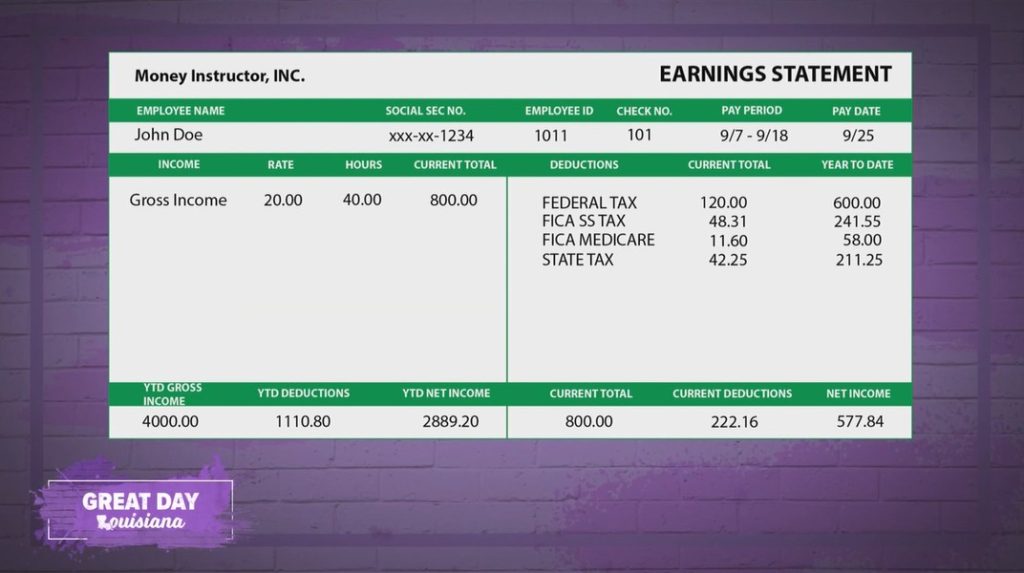
If you are anything like me, you may be surprised when you get your first paycheck. Until that moment, I had only worked jobs as an independent contractor, where earning a $1 meant actually receiving a $1. If you’ve accepted a job as a true W2 employee after graduation, you likely negotiated a salary that doesn’t reflect your actual take-home pay. It may not be close at all, leading you to wonder, “I think there is something wrong with my paycheck.” In this blog and the accompanying video, we clarify essential terms for recent college graduates and anyone curious about their paystub, providing a jump start to understanding the United States tax code.

Independent Contractor vs. Employee

First, it’s important to understand the difference between how the person is viewed performing the work for the business. Are you an employee of the company or an independent contractor? Certainly, some companies operate in a grey area when it comes to classifying labor. You may feel like an employee, only to discover after reading this article that you’re actually classified as an independent contractor, which essentially makes you a business owner! For this article, we will set aside the legality of the matter regarding your employer in the eyes of the Department of Labor.

There is nothing inherently good or bad about this, but there is a stark difference in your benefit eligibility, tax responsibility, and ability to make certain deductions. A deduction is something that ultimately lowers your taxable income. To qualify for many deductions, you need to be self-employed to take advantage of them.

For example, a remote worker cannot claim a home office deduction and deduct this expense from their income. However, if other eligibility requirements are met, an independent contractor can use the home office deduction to reduce their taxable income.

Important Paycheck Terms for Employees

There are three (3) general categories of deductions that reduce your gross pay. 

Employee Taxes: Ordinary income tax + Federal Insurance Contributions Act (FICA) tax that funds Social Security and Medicare

  • Federal Income Tax

  • State Income Tax: 3% for Louisiana residents

  • Old Age, Survivors, and Disability Insurance (OASDI or Social Security): 6.2% on a maximum income of $176,100 in 2025. 

  • Medicare: 1.45% + 0.90% on income over $200,000. 

Pre-Tax Deductions: These will vary depending on your employee benefits, but the common ones are:

  • 401k Contributions

  • Health/Dental/Vision Insurance Premiums

  • Flexible or Health Savings Accounts

Post-Tax Deductions: These will also depend on your employee benefits and selections, but the most common ones are:

  • Roth 401k Contributions

  • Some Life and Disability Insurance Premiums

  • Legal Insurance

Sample Paycheck

As a basic and common example, here’s what a pay period might look like for an Individual earning $75,000.

Assumptions

  • Tax Filing Status: Single
  • No Dependents
  • Pay Periods: 24 (Semi-Monthly)
  • Pre-Tax 401k Contribution: 4% ($3,000 annual)
  • Roth 401k Contribution: 4% ($3,000 annual)
  • HSA Contribution: $4,300 (2025 Individual Max)
  • Health Insurance Premium: $200/month

In this scenario, the employee’s net pay is 65% of their gross pay. 18% of their income is allocated to taxes, while 17% is earmarked for employee benefits, including health insurance and retirement savings. This leads to the individual having $2,174 less each month to allocate toward their budget for housing, transportation, food, and discretionary expenses. 

If you’re unsure what your net pay might look like, I recommend using 60% as a baseline. This will provide a fair estimate of your actual pay that will reach your checking account before you commit to significant fixed expenses, such as rent or transportation. It also provides an opportunity to begin your journey as a saver or investor, as illustrated in the example above.

Does This Affect Independent Contractors Differently?

As an independent contractor, you’ll be paid, but you won’t get earning statements or paystubs detailing your income. But here’s what you need to understand: you owe taxes!  The United States has a pay-as-you-go tax system. If you have income, you are generally required to make payments as you earn it. As an employee, this occurs through your paystub via mandatory company withholding, as shown above. For independent contractors, you are responsible for estimating what you will owe, setting that money aside, and remitting payment quarterly. If you don’t pay your estimated taxes quarterly, you could face underpayment penalties come the tax deadline (April 15th of the following year). 

Here are the dates you are expected to estimate your quarterly taxes owed and pay by:

  • Q1 January – March: April 15th
  • Q2 April – June: June 15th 
  • Q3 July – September: September 15th
  • Q4 October – December: January 15th

As stated, there are no safeguards in place, like the mandatory withholding for employees. If you haven’t paid any taxes, you’re in for a nightmare when your tax filing software spits out the amount owed. Additionally, you owe not only the employee side of the FICA tax but also the employer side (another 7.65%). We’ll save the nuance of correctly making self-employment deductions for another day! Some individuals may not fit neatly into employee or independent contractor categories; for example, one can be an employee while also running a side hustle. Keep reading…

Is My Company's Withholding For Me 100% Accurate?

At the start of employment, everyone will fill out a W-4 Employee Withholding Certificate to instruct their employer how much money to withhold for taxes. Unless you tell them otherwise, they only account for the money they are paying you, along with the information you provide regarding tax filing status and dependents.

Have a side hustle? 

Your employer will only adjust your withholding if you instruct them to do so on your Form W-4 and accurately complete the form to take your additional income into consideration. Otherwise, you will need to manually calculate the taxes owed for this additional income and make quarterly payments, as mentioned in the section above regarding independent contractors. 

The most accurate way to do this is to go online and use the IRS’s Tax Withholding Calculator.

Negotiating Your Next Salary

Not everything that reduces your gross pay to actual pay is bad. In fact, most are either beneficial or, at the very least, unavoidable, like taxes. In our sample pay stub above, this individual had access to a 401k retirement plan and a Health Savings Account. Although not shown here, most (but not all) employers offer matches for these types of accounts. That’s MORE money paid to you than you bargained for. When reviewing job offers or negotiating your salary, it’s crucial to assess the complete range of compensation and benefits available. The most significant variable beyond any form of equity compensation is always health insurance. How attractive are the plan options in terms of the premium amount, as well as the deductible and out-of-pocket maximum?

If you’re a recent college graduate, this is the first paycheck of (hopefully) many! Set aside time to understand the foundational aspects of it so you can prepare for future earnings.

Tips on negotiating your next salary? We got you!

Tips for selecting benefits during open enrollment season? We also got you!

Fiduciary, fee-only, Certified Financial Planner, Mike Turi

Mike Turi, CFP® APMA™ is the Founder and a Lead Financial Planner at Upbeat Wealth, a fee-only firm based in New Orleans and serving clients virtually across the country. He specializes in providing straightforward financial guidance to ambitious young families as they navigate life’s many milestones.

Do you have questions about what we shared in this post, or anything else in general? Feel free to schedule a free consultation or drop us a line!

Sign up for our newsletter (at the bottom of this page) to stay up to speed on our Upbeat Insight.

Disclaimer: All content in this article is provided for educational, general information, and illustration purposes only. None of the information is intended as investment, tax, accounting, or legal advice. Nor is it a recommendation for purchase or sale of any security, or investment advisory services. We encourage you to consult with a financial planner, accountant, and/or legal professional for advice on your specific situation. Read our full disclaimer here.

How to Take Control of Your Cash Flow

How to take control of your cash flow

I believe the venerable Wu-Tang Clan hit the target when they posited that “cash rules everything around me”. It’s a simple yet profound fact of the modern world we live in, largely applicable to those in all walks of life. Equally important, in my mind (though not as likely to serve as the foundation of an iconic hip-hop track), is that ruling your cash flow is one of the single most impactful steps to making progress towards financial goals.

Having the right system in place delivers real peace of mind and points you more directly towards what you hope to accomplish. Meanwhile, if no effort is made to intentionally manage the flow of dollars through your day-to-day life, you’re likely feeling the stress and holding yourself back.

So that’s what we’ll work through here: some strategies on how to take – and maintain – control of your cash flow. Because once you get that money, you still gotta know what to do with the dollar, dollar bills, y’all.

Who Needs to Take Control of Their Cash Flow?

Well, everyone!

The needs and reasons may be different person-to-person, but everyone stands to benefit from being in greater command of their cash flow.

It is not just for those who…

  • Are running a deficit each month
  • Are working to get out of debt
  • Need to build up their savings
  • Feel stressed when thinking about their income vs. expenses

It is also valuable for those who…

  • Have a high income
  • Are already saving at a strong rate
  • Are on pace to meet their financial goals

By the way, controlling your cash flow doesn’t have to mean meticulously tracking every single dollar that passes through your accounts – though that might be the right move for certain people. And it’s also not strictly synonymous with saving or investing more. In some cases, it may even entail spending more in certain areas of your life. It really boils down being in tune with how money is generally moving and directing your available resources in a way that aligns with your intentions.

Where to Begin

Awareness is always the first step.

You have to run a thorough diagnostic to understand if there are any issues, and what exactly they are, before you start considering how to fix them. Don’t think there’s anything wrong? There might not be! But even highly profitable companies conduct financial audits. Regardless of how you feel about your current situation, this is a must.

To get the best picture of what your current cash flow looks like, I recommend reviewing at least the last three months. The most accurate approach is to pull up the statements for all your credit cards and bank accounts. Once you have them:

  1. Go through each one line by line, categorizing every expense and savings contribution (a simple spreadsheet can make this easy). Examples of these categories might be:
    • Utilities
    • Restaurants
    • Gas (vehicle)
    • Subscritptions
    • Hobbies
    • Emergency Fund Contributions
    • etc…
  2. Add up the total amount in each category per month and then average them out. 

This will give you a usable figure for how much you’re currently spending and saving on a monthly basis in different areas. Of course, spending on certain things (such as eating out or gas for your car) will fluctuate. But getting a working average is perfectly fine. 

When people take the time to go through this exercise, I almost always notice the same results:

  • They find the awareness gained from this process very powerful, often learning things they didn’t know or finally facing head on something they tried to ignore.
    • “Ok, I didn’t realize I was spending that much on Amazon.”
  • It becomes immediately clear where adjustments can be made.
    • “I know I can definitely rely on Uber Eats less and still be ok.”
  • If needed, people are generally more prepared to act on any changes.
    • “Let’s go!”

Find a System to Manage and Track Your Cash Flow

Having a reliable framework and a continuous feedback loop (that works for you) helps you get more organized and then stay in control.

If your financial status quo has some cracks in it, it’s worth looking for tools to make your life easier. There is no shortage of apps out there designed for tracking your cash flow. A couple that I regularly hear success stories about are:

Additionally, a variety of different budgeting “approaches” exist. The right one for you depends on your needs and your style. A few of them include:

At Upbeat Wealth, we like to steer the households we work with into a “Flow-Based Budgeting” system. We first learned about this method from a presentation given by Natalie Taylor and have incorporated our own flavor. At a very high level, here’s how it works:

  • To start, all income gets deposited into a single primary checking account (a “source” account, if you will).
  • Then, you break down your spending into three categories: 
    • Fixed Expenses are anything that does not change (or stay about the same) month-to-month, such as mortgage, insurances, gym membership, phone bill, monthly investing/saving, etc.
    • Flex Expenses are those that do vary on a monthly basis, including things like groceries, self care, entertainment, etc.
    • Non-Monthly Expenses are things that might get paid quarterly, every six months, or simply come up irregularly. Examples include travel, insurances, property taxes, etc.
  • After you lay out all of the “fixed” and “non-monthly” expenses + savings, it becomes clear how much is available to go towards the “flex” category of spending. This creates a natural guardrail in your budget. Whatever that leftover amount is, that’s what is free to go to these expenses each month. You can even break it up into a weekly figure to monitor it more closely.
  • The “source” checking account feeds everything:
    • All “fixed expenses” are pulled out of here, ideally via auto-pay. 
    • Automated transfers are established to fund the “non-monthly” account. If you total the annual expense for all the non-monthlies, divide that by 12 and transfer that here each month.
    • Finally, you can set up weekly transfers to the “flex” account to cover those. For some this is likely a category of spending that goes on a credit card. If so, you’ll want to keep that weekly card balance within the set limit and pay it off at the end of each week.

Free up Some Cash Flow by Targeting the Low-Hanging Fruit

There are almost always some easy places to win back cash flow.

Did you watch the Severance season 2 finale and know you won’t be opening Apple TV again until the 3rd one comes out? Cut that bill. If there are any subscriptions or memberships that you’re not actually using (or can easily live without), maybe it’s time to unsubscribe. A few bucks here and there add up. Mike writes more about our 3-step guide to evaluating your memberships and subscriptions in another post.

When’s the last time you shopped your auto or homeowners insurance? These types of coverages (and other property & casualty lines) are worth reviewing at least every few years. If it’s been a while, you very well may be able to lock in a better rate for the same coverage with another carrier. 

Clarify Your Purpose and Any Trade-Offs

If change is necessary, zero in on your motivation to reinforce your efforts.

What is your specific goal in wanting to improve your cash flow management? It’s one thing to say you want greater control. There’s going to be much more friction if you’re crystal clear on why. Maybe you want to…

  • Shrink that high-interest debt balance a lot faster
  • Finally build up to a full Emergency Fund
  • Save up for an international trip later in the year
  • Treat you and your partner to more fun date nights
  • Get closer to maxing out a retirement account
  • Save for a house down payment
  • Etc…

Whatever it is, put that purpose at the front of your mind. Without it, it will be hard to maintain motivation because any changes you have to make are going to involve very real trade-offs. Maybe putting more money towards saving for a much-needed new car will require spending less on eating out. If so, spelling it out like this might lead to better results than simply telling yourself that you’re going to restaurants too much and need to cut back. 

  • Lame: “We spend too much money at restaurants and have to cook from home more now.”
  • Cool: “By cooking from home a little more, I’ll be able to put $500 more per month towards the next car my growing family needs and drastically speed up the purchase timeline.”

Make the effort to define what things are most important for your money to go towards and why. Similarly, identify the things that aren’t as important for you to be directing resources towards.

Keep it Realistic and Celebrate Small Wins

Take it one step at a time.

If you’re normally spending $400 per month on food delivery services, it may not work very well if you immediately try pulling this down to $100 each month. Incremental steps over time will help you ease into change and keep with it. So maybe you’d target spending $100 less each month until you arrive at your goal of $100. 

Are you focused on growing a bucket of savings for a major expense like a house down payment? Maybe you have a pile of credit card debt, and it’s tough to fathom getting past it. Financial obstacles like these could easily take several months or even years to overcome. A seemingly long road ahead can be daunting. Along the way, focus on smaller targets, acknowledging and celebrating in some way each time your balance for the down payment grows by another $10,000, or you pay off another one of the credit card balances. A lot of the big milestones we work towards involve major dedication. So help keep yourself on track by recognizing the smaller wins as you progress.

AUTOMATE, AUTOMATE, AUTOMATE

Remove as much thinking as possible. Automate savings and debt payments.

The less manual an action is, the more likely it is to occur. If you determine that you’re able to save or invest a certain dollar amount each month, go ahead and set up automatic contributions into those accounts. The same can be done with debt payments. You can set your credit card balance to autopay and even automate extra payments to any type of liability for those you’re working to aggressively pay down.

Automating gets you out of your own way. It also helps with the practice of “save first, spend second”. By ensuring your goals are being met first, it frees you up to spend what’s left over without any guilt.

Consider Setting the Credit Card Aside

If spending or credit card balances are getting hard to rein in, switch to strictly using the debit card.

By exclusively swiping your debit card, you can only spend what you have in the bank. It forces you to think a bit more before any purchase. On the other hand – with credit cards – it doesn’t matter how hard we tell ourselves otherwise, they simply don’t feel as real. And don’t worry about the points. The cash back and those miles are no good if chasing them ends up costing you more in the long run. It doesn’t have to be a permanent change, but it’s a sure way to curb spending. 

Be Mindful of Lifestyle Creep

Take a proactive stance when income increases.

As your income goes up over time, continue to keep your focus on what is most important to you and your family. It’s ok if that means spending more money on certain things – as long as your other priorities are met too. You worked hard for it, why not put more towards travel, treating the kids, or whatever else brings you joy?

At the same time, a jump in pay is a wonderful opportunity to enhance progress towards goals. So when this happens, take a pause. Revisit your financial plan. See if you can identify tangible ways to put those new dollars to work in a way that supports your goals. If nothing else, consider initially saving at least half of the increase. Be thoughtful with what spending areas get the other half of the increase. One thing is almost certain – if you’re not intentional with it, the new income will find a way to disappear.

In closing, I can’t overstate the benefits of ruling your cash flow. While it may not make a good hip-hop hook, it is most definitely the foundation of a healthy financial plan.

Fiduciary, fee-only, Certified Financial Planner, Eddy Jurgielewicz

Eddy Jurgielewicz, CFP® is a Partner and Lead Financial Planner at Upbeat Wealth, a fee-only firm based in New Orleans and serving clients virtually across the country. He specializes in providing straightforward financial guidance to ambitious young families as they navigate life’s many milestones.

Do you have questions about what we shared in this post, or anything else in general? Feel free to schedule a free consultation or drop us a line!

Sign up for our newsletter (at the bottom of this page) to stay up to speed on our Upbeat Insight.

Disclaimer: All content in this article is provided for educational, general information, and illustration purposes only. None of the information is intended as investment, tax, accounting, or legal advice. Nor is it a recommendation for purchase or sale of any security, or investment advisory services. We encourage you to consult with a financial planner, accountant, and/or legal professional for advice on your specific situation. Read our full disclaimer here.

Upbeat Wealth on the News: Planning your Christmas Budget

Mike Turi sits down with host Malik Mingo on Great Day Louisiana’s Christmas in July special about planning your end-of-year gift budget.

Great Day Louisiana: Christmas in July

Budgeting for Christmas

First and foremost, you know it’s coming. Don’t spend January stressing over your credit card bill, wondering how you overspent. Christmas falls on 12/25 every year, indefinitely, until we are swallowed up by the sun or whatever.

The recurring theme in all our budgeting discussions is, to be honest with yourself about how much you want to spend and to be intentional about how you save for it.  If it’s important for you to have a certain amount of money to spend on Christmas, divide that number by 12 and start setting aside money for it beginning in January. For larger financial goals, it’s helpful to get into the habit of paying now by saving and then actually buying them later.

Best Savings Vehicle

I’m a big fan of categorizing funds into different buckets or accounts. My mind is already a mosh pit, so I enjoy having my spending goals clearly defined.

What’s more effective: having $10,000 in a general savings account or distributing the money into separately labeled accounts/buckets for specific purposes ($5,000 Emergency Fund, $2,000 Travel, $2,000 Home Improvement, $1,000 Gifts/Celebrations)?

My ultimate advice is to BE SPECIFIC. It’s the key to guilt-free spending. I recommend all my clients use Ally Savings for this very reason. Ally allows you to categorize your goals into buckets under one high-yield account, eliminating the need for multiple bank accounts. All you have to do is start funding them! Once again, you’re paying now and buying later using this method, so it’s much harder to overspend as opposed to buying now and paying later. When you buy now and pay later, you’ve detached receiving a good or service from its affordability. Most importantly, by setting clear goals and aligning your spending, you are beginning to gather empirical data on your priorities and can more thoroughly review your trade-offs.

Struggling with Budgeting?

Regarding our budget, water always tends to find its level. But that level isn’t always healthy. At the most basic level of financial health, your income must exceed your expenses. For instance, I worked with someone recently who had an average credit card debt of $20,000 for over five years. That was their emotional level of being financially “okay.” However, that $20,000 annual credit card balance cost them $5,000 in interest charges. That’s not good.

In general, I think the biggest challenge we all face is the evolution of our needs. “Wants” are subconsciously being converted into “needs” hence the term lifestyle inflation. Need evidence? Reflect on what you considered a “need” 10 years ago or in college. You’ve likely also had a decent raise in income from that time, but your spending might be moving in lockstep.

So what are your options? 

  1. Go all cash. There’s a big difference between clicking a few buttons online and spending $100 and physically handing over a $100 bill. 

  2. Get back to basics. Tear it all down—not your housing costs, daycare expenses, or any other true needs. But maybe you have 1000 subscriptions? Or the convenience of Amazon and online shopping is overpowering. Cancel it all and see what you actually miss. Or set up a specific routine for when online purchases can occur. Take the spontaneity of having anything in the world delivered to you within 48 hours. It’s probably costing you a small fortune.

Alternative Forms of Gift Giving

We are constantly bombarded with advertisements for material goods. It is what it is. It doesn’t mean that’s what’s important. A common observation I’ve made while working with families is that experiences and time spent with loved ones far outweigh consumer products. And that upon deeper reflection upon one’s spending, most consumer products are an expression of such. As in, if you peel back the layers of why someone might want a really nice dining room table, it’s actually because they need one that is big enough to have family meals. So it’s probably not important for it to be fancy – just spacious and sturdy.

Upbeat Wealth on the News: The Truth Behind Credit Cards

Upbeat Wealth Founder Mike Turi joins Great Day Louisiana’s Malik Mingo to discuss the truth behind credit cards. Check out the video and the blog below for the good, the bad and the ugly!

Great Day Louisiana: The Truth Behind Credit Cards

The Biggest Credit Card Myths

  1. Closing a Credit Card Does Irreparable Damage to your Credit Score: Credit history is a small component of your overall score. Yes, be cautious about the timing of closing credit cards if you are actively shopping for a car or home, but do not sweat closing a credit card that charges you an annual fee greater than your benefits.

  2. Making the minimum payment doesn’t result in interest charges: However, unless you have a 0% introductory rate, interest will accrue on the unpaid balance over the minimum payment. To avoid interest charges, pay off your full statement balance on time.

  3. Having more credit cards is a sign of money trouble and overspending: Having multiple credit cards can make it easier to categorize and track spending. Additionally, many consumers have the time and talent to play the points game without sacrificing their financial stewardship.

Common Mistakes

  1. Overspending: You are dangerously treading water if you consistently purchase items on credit that you couldn’t purchase outright. The average interest rate across credit cards is 24%. If you cannot pay your unpaid balance and that interest starts to compound, it’s a very tough situation to get out of.

  2. Foreign transaction fees: Know if your card charges one before traveling internationally or making international purchases.

  3. Chasing rewards: Do not put the cart before the horse. Churning credit cards or inefficiency tracking your expenses may prevent you from having control over your cash flow. For most, it’s better to optimize rather than maximize. Understanding your actual cash flow so you’re spending/saving with intention is more powerful than grabbing every last mile on vacation booking.

How to Use Credit Cards Responsibly

Credit cards aren’t inherently bad. Consumers receive great benefits such as convenience, purchase protection, and rewards! 

  1. Charge what you can afford: Treat your credit card like it’s a debit card or cash. While technically borrowing money from the credit card company, you’re actually just borrowing from your future self if you struggle to pay your entire balance on time.

  2. Building credit: Credit cards are a great way to build up your credit for making bigger purchases that require a secured loan, such as a home or car. Interest rates are correlated with the strength of your credit.

  3. Understand your redemption options: Earning points is easy, but understanding their value and properly redeeming them is rather complicated. 

Finding the Right Credit Card

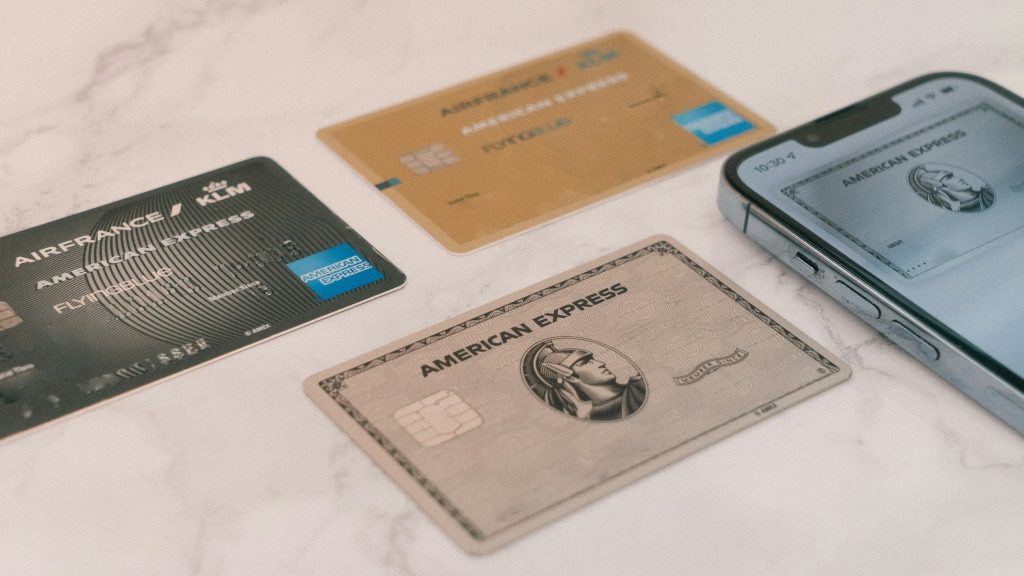
If you can responsibly use credit, I recommend having a few different credit cards. Assigning spending categories to credit cards makes tracking your spending and maximizing your rewards easier. This is especially helpful if you are trying to limit spending on a specific subcategory. By keeping it on 1 credit card, you can monitor the balance weekly and stay on track. The categories to pursue depend on your household. There’s pretty much a card for everything! For simplicity, I recommend having a general cash-back card for fixed expenses and then specializing from there. Pick two or three categories you allocate the most resources toward and find the best rewards! Often, I encourage clients to separate their discretionary day-to-day expenses, such as dining, entertainment, and shopping, onto a single card, as many are prone to overspend on these categories and lose sight of their budget. Looking for the best deal? There is an abundance of information available on the Internet about the best cards by category and current bonus offers. There are entire communities dedicated to maximizing one-time and ongoing credit card rewards. And it’s not just about miles, points, and cash back. Credit cards often include great perks like airport lounge access, streaming service or rideshare credits, free global entry/TSA precheck, and complimentary hotel services. Ultimately, the best rewards are those you seamlessly take advantage of without introducing too much hassle.

In Credit Card Debt? Here are the Next Steps!

Stop using your credit cards immediately and look for areas where you can cut back. If necessary, you may need to pick up temporary extra work. While the financial ramifications of credit card debt can be incredibly damaging, the behavioral aspect is the tougher cycle to break. 

  1. Contact a licensed credit counselor via the National Foundation for Credit Counseling. Before you can fix the debt, you have to correct the behavior.

  2. Create a plan to eliminate the debt and stick to it! Staying on track and knowing the end game can be motivating. 

  3. Budget seriously and save a sustainable amount toward an emergency fund to reduce your chance of taking on future debt. 

  4. Call your credit card company, explain the situation, and see if they’ll pause interest charges on your card or get you on a mutually beneficial payment plan. 

  5. Determine what motivates you to keep going more between paying the highest interest rate debt vs. the smallest balance.

  6. After successfully correcting the behavior, explore a balance transfer or loan consolidation to save interest as you repay.